

We present the interview with Altun Yasinli, Deputy Head of the Strategic Development and Innovations Department of the Small and Medium Business Development Agency (KOBİA).
What is clustering and what opportunities does it create for entrepreneurs?
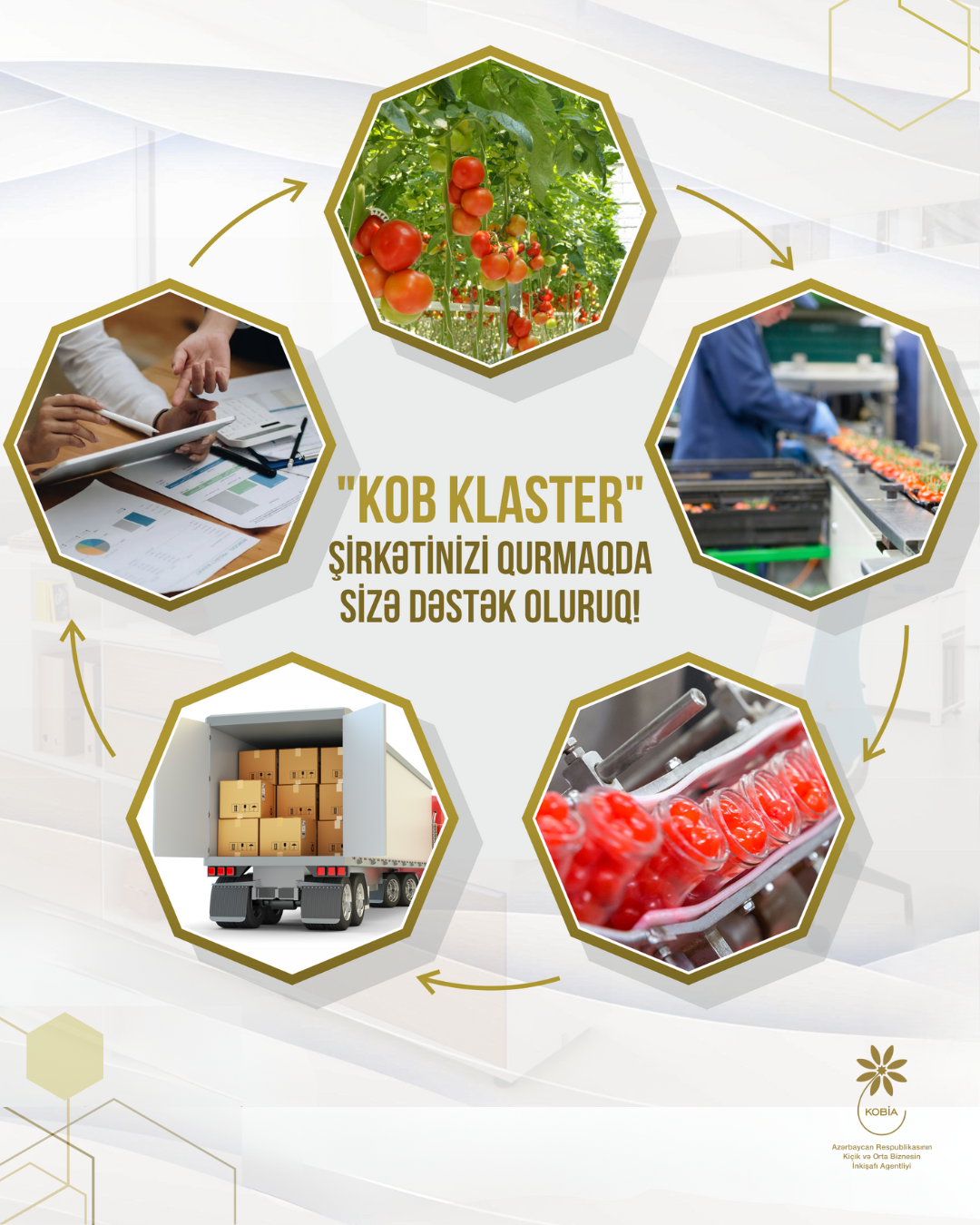
An SME cluster is an ecosystem that brings together an SME cluster company and participants of an SME cluster, which is formed on the basis of location in the same or similar fields of economic activity within a specific geographical area and which shares workforce, a common market and services. This ecosystem, as a result of cooperation within the cluster, leads to the optimization of costs and an increase in production efficiency. At the same time, the SME cluster model increases overall productivity and ensures the development of the competitiveness of the enterprises concerned by strengthening inter-enterprise synergy, joint use of resources and the exchange of innovations.
What state support and incentives related to clustering exist in our country?
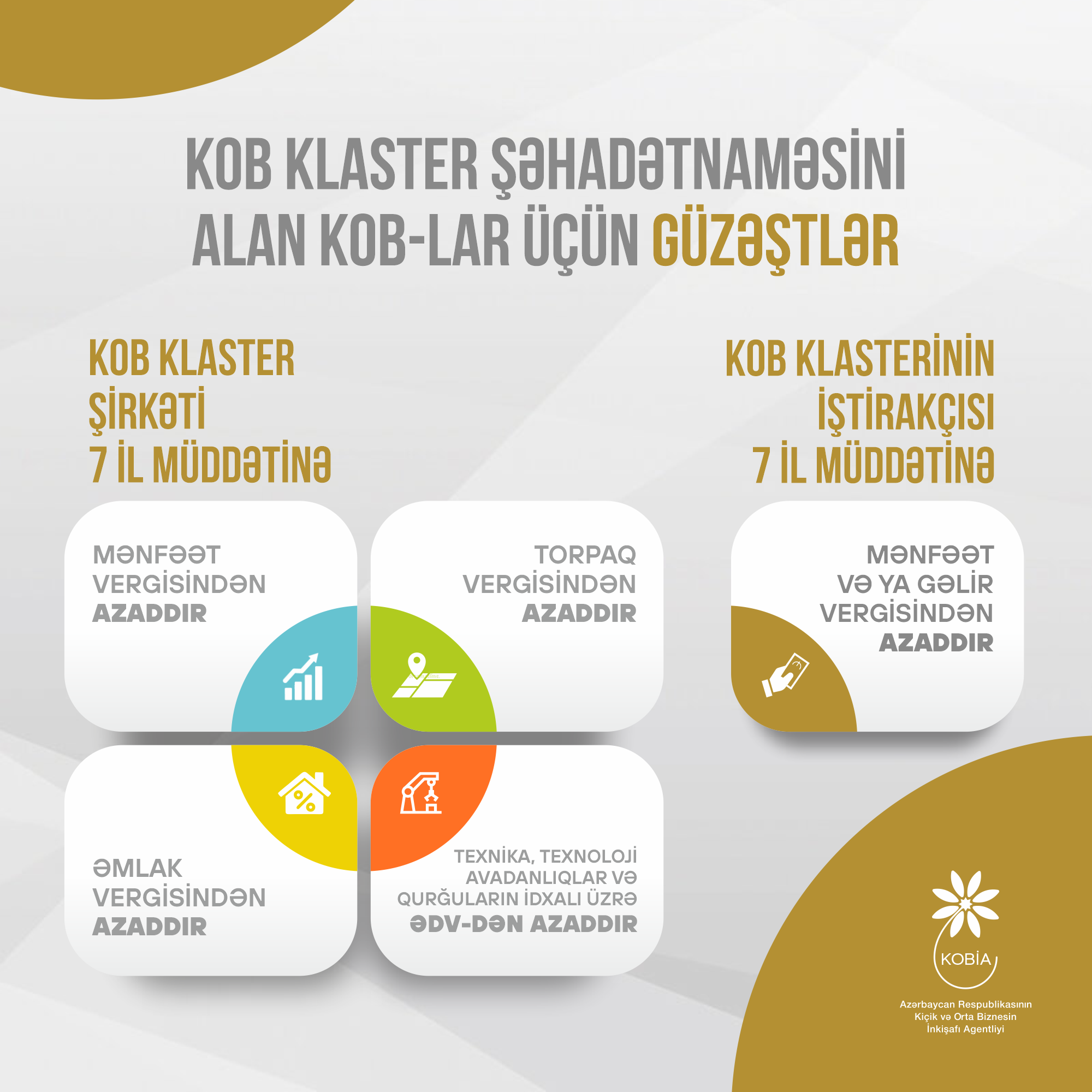
The Tax Code of the Republic of Azerbaijan provides for a number of tax incentives for an SME cluster company and its participant. Thus, an SME cluster company is exempt for a period of 7 years from profit tax, as well as from land tax and property tax on lands used in the activities of the SME cluster. At the same time, on the basis of a supporting document, it is exempt from VAT on the import of machinery, technological equipment and installations for production or processing purposes.
A person who is a participant of an SME cluster is exempt, for a period of 7 years, from profit tax or income tax on the part of the profit or income obtained from goods supplied under a contract concluded with the SME cluster company that is directed towards capital expenditures.
The Small and Medium Business Development Agency (KOBİA) also provides relevant support for the preparation of the functional map and financial-economic justification of the SME cluster, as well as for finding a participant of the SME cluster.
What are the conditions and required documents for obtaining an “SME Cluster Certificate”?
According to the relevant legislation, it is initially required that within the framework of the SME cluster to be established, the “SME cluster company” conclude economic transactions with at least 10 micro, small and medium business entities that are not mutually dependent, and that 50% of the value of the raw materials and materials of the product produced within the cluster be supplied by local producers that are participants of the cluster. The purpose here is to increase the role of local production and SME entities in the development of the cluster.
At the same time, the creation of a new competitive product not produced in the Republic of Azerbaijan, the creation of a product for which more than 50% of consumption is covered through imports, or the provision of accommodation and lodging services (hotel, motel, camping and others) are among the main criteria of an “SME cluster company”.
In addition, a minimum investment volume has been determined for the project to be implemented by the “SME cluster company” in accordance with the investment potential of the regions of the country.
KOBİA is the authorized institution issuing the certificates of “SME cluster company” and “SME cluster participant”. For the establishment of an “SME cluster company”, a commercial legal entity must apply to KOBİA in written or electronic form together with the relevant application and the documents attached to it. SMEs wishing to become participants of an SME cluster must conclude a contract with the cluster company and apply to KOBİA.
The certificates provided to SME cluster participants confirm their status as cluster participants and they also benefit from the incentives. Entrepreneurs can obtain information on clustering, state support for the establishment of an SME cluster, incentives, and the documents required for obtaining the certificates of an SME cluster company and its participant by contacting KOBİA's 131 Call Center.
How can micro entrepreneurs benefit from clustering?
Micro entrepreneurs can participate within the cluster as suppliers, service providers or logistics partners. This helps them obtain a stable order portfolio. At the same time, they gain access to a larger market through the cluster. Joint marketing activity facilitates the promotion of products. In addition, the use of shared infrastructure reduces costs. This model creates favourable conditions for the rapid growth of micro entrepreneurs.
In which sectors would the establishment of clusters be efficient?
KOBİA has conducted a relevant study to determine the SME cluster potential across the economic regions of our country, taking as a basis their natural resources and specialized production potential. The study shows that the establishment of SME clusters in the fields of agricultural processing, tourism and waste recycling is more efficient in our country.
In which fields can clusters be established in the Karabakh and East Zangazur economic regions?
There is significant potential for the establishment of agricultural processing-oriented clusters in these economic regions. At the same time, the cluster model in the field of tourism and hospitality can contribute to the economic revival of the region.
We would ask you to provide more detailed information about the existing SME cluster companies in Azerbaijan.
In Azerbaijan, “SME Cluster Certificates” have already been issued to two companies. The first SME cluster company is “Frutena SME Cluster Company” LLC, and this company will produce natural fruit concentrate in Guba. The plant is located on an area of 4 hectares. It is planned to produce 4,000 tons of apple concentrate annually here, for which the use of 28,000–30,000 tons of apples is projected.
Of the 15 million manats of investment envisaged for the activities of the SME cluster company, 80% has already been spent for the commencement of the plant's operations. Within the framework of the project, it is planned at the initial stage to provide permanent employment for 50 people. Construction and installation works here are already nearing completion and equipment installation works are being carried out.
“Naturaoil SME Cluster Company” LLC, which will operate in Sumgayit, will produce hydro-refined lubricating oil for the engines of transport vehicles (cars, trucks, trains and ships). For this purpose, environmentally friendly lubricating oils meeting modern requirements will be produced at a plant to be established on an area of 0.7 hectares, mainly using local raw materials, particularly waste lubricating oils.
Within the framework of the project, it is envisaged that the entrepreneur will invest 3 million manats at the initial stage and a total of 5.8 million manats overall. It is planned to create nearly 30 jobs at the initial stage.
As a result of the activities of both SME cluster companies, cooperation and joint activity with SMEs will contribute to the reduction of imports, the expansion of the production of competitive products and, at the same time, the increase of export opportunities.
Powered by Froala Editor